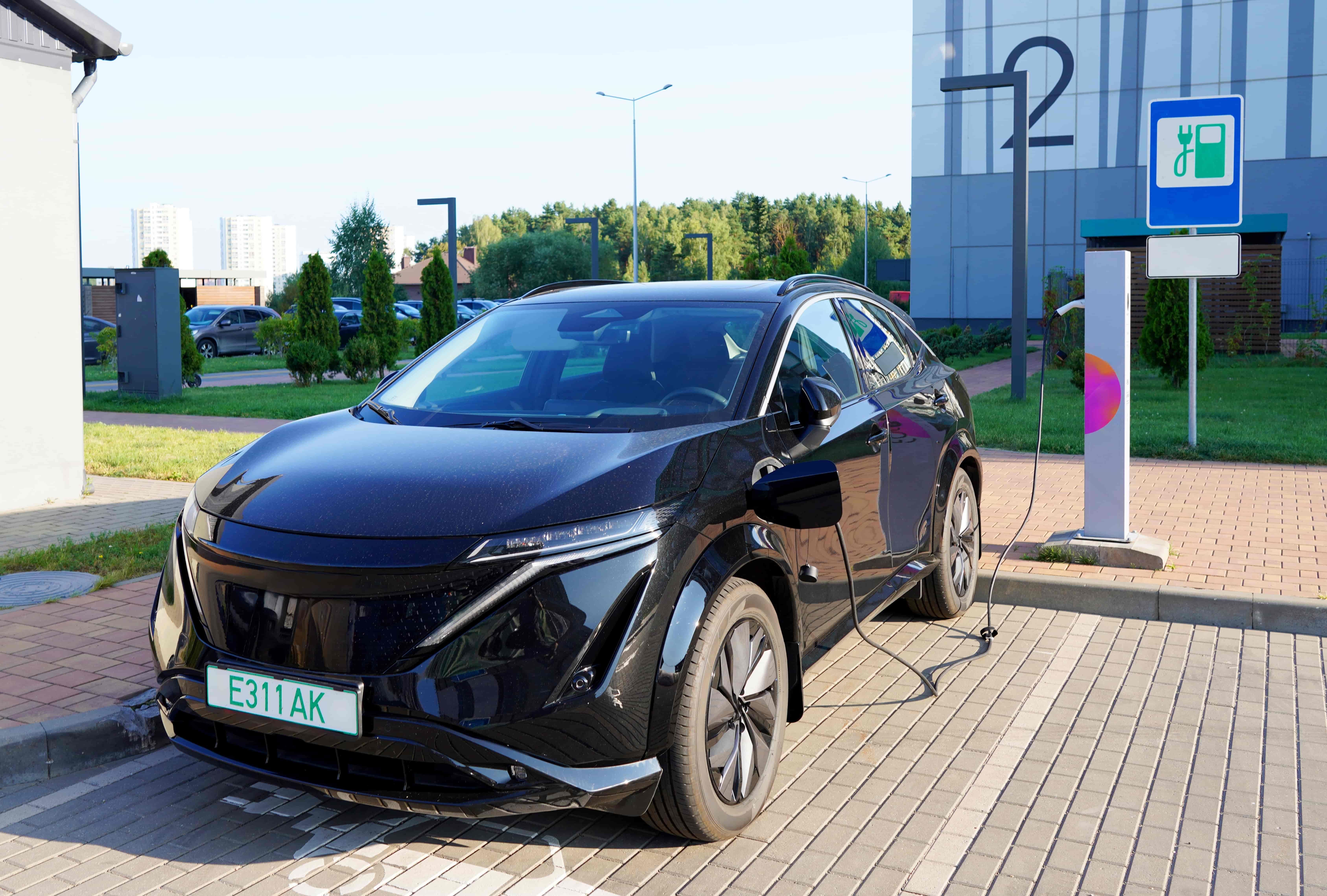
Could you imagine driving past a gas station, seeing the price hit $4.00 a gallon, and smiling because you know your "full tank" cost you less than a cup of coffee?
For decades, the debate between electric car cost vs Gas cost has been emotional: environmentalists versus gearheads. But in late 2025 and upcoming 2026, the conversation has shifted entirely to mathematics. As inflation squeezes household budgets, drivers are asking the ultimate financial question: Is the higher price tag of an EV actually worth the savings at the plug, or is it just a luxury toy? The answer lies in the hidden numbers of ownership.
The Sticker Shock: Addressing the Elephant in the Room
Let’s be honest right upfront: Electric car cost is higher on day one. As we enter the final phase of 2025, the average new electric vehicle (EV) still commands a premium over its gas-powered counterpart. You might pay $45,000 for an electric crossover, while a similar gas model costs $38,000.
This $7,000 gap is what stops most buyers in their tracks. It feels safer to keep that money in the bank. However, looking only at the purchase price is like judging an iceberg by its tip. The real financial story happens over the next five years of driving.
The "Fuel" Math: Gallons vs. Kilowatts
This is where the EV begins to claw back its value. Internal combustion engines are surprisingly inefficient. They waste roughly 70% of the energy from burning gas as heat. Electric motors, by contrast, are over 90% efficient.
Let’s run a real-world comparison for a driver covering 15,000 miles a year:
The Gas Car:
- MPG: 30 miles per gallon.
- Gas Price: $3.50 per gallon.
- Annual Cost: You burn 500 gallons a year. Total: $1,750.
The Electric Car:
- Efficiency: 3.5 miles per kWh (kilowatt-hour).
- Electricity Price: $0.16 per kWh (National Average).
- Annual Cost: You use roughly 4,285 kWh. Total: $685.
Recommended Decision: The EV driver saves over $1,000 every single year just on fuel. If you charge at night during "off-peak" hours (when electricity is cheaper), that savings gap widens even further.
The Maintenance Myth: Goodbye, Oil Changes
When you buy a gas car, you are signing up for a lifetime subscription to mechanic visits. An internal combustion engine has hundreds of moving parts, pistons, valves, spark plugs, timing belts, and transmissions. They all friction against each other, break, and leak.
An electric motor has essentially one moving part. When you switch to an EV, your maintenance schedule effectively vanishes.
No Oil Changes helps you save $100 a year. No transmission fluid in EVs usually lead to a single-gear reduction drive that is sealed for life.
Brake Pads Last Forever. Why? Thanks to "regenerative braking" (where the motor slows the car down to recharge the battery), you barely use your physical brake pads. It is common for EV brake pads to last 100,000 miles or more.
Over a 5-year ownership period, Consumer Reports data suggests EV owners spend roughly 50% less on repair and maintenance than gas car owners. That is another $4,000 back in your pocket over the life of the car.
The Hidden Factor: Depreciation
Historically, electric cars lost value like stones dropping in a pond. Early models like the Nissan Leaf degraded quickly, scaring off second-hand buyers.
However, the script has flipped. Modern EVs with liquid-cooled batteries (like Teslas, Hyundais, and Fords) are holding their value surprisingly well. Because they have fewer mechanical parts to fail, a used EV with 50,000 miles drives almost identically to a new one. Conversely, gas cars face a looming threat: Obsolescence. As governments tighten emission regulations and manufacturers stop building gas engines, the resale value of traditional gas cars may plummet as they become "old tech" technology.
The Break-Even Point
So, when does the electric car cost vs gas equation actually tip in your favor? If you pay a $7,000 premium for the EV but save:
- $1,000/year on fuel
- $800/year on maintenance
- $7,500 upfront via the Federal Tax Credit (if you qualify)
If you get the tax credit, the EV is cheaper on Day One. If you don't get the tax credit, the break-even point is roughly Year 4. Every mile you drive after that fourth year is pure profit compared to your neighbor in the gas SUV.
Concluding Thoughts
Buying an electric car forces you to think like an investor, not a consumer. You are paying a higher capital cost upfront to secure significantly lower operating costs for the next decade.
If you drive very few miles (under 5,000 a year), a cheap gas car still makes financial sense. But for the average American commuter, the math is undeniable. The gas station is draining your wallet in ways you don't notice until you stop going there.


